

Utagawa Hiroshige
Japanese, Edo Period • 1797–1858 • Master of Ukiyo-e Landscape
Utagawa Hiroshige, born Ando Tokutaro in Edo (modern-day Tokyo) in 1797, was the son of a samurai fire warden serving the Tokugawa shogunate. Orphaned at twelve, he briefly inherited his father’s post before turning fully to art. In 1811, he entered the Utagawa school under Utagawa Toyohiro and, the following year, received the artist name Utagawa Hiroshige. His early work focused on traditional ukiyo-e subjects—kabuki actors, beauties, and warriors—before he shifted decisively to landscape in the 1830s, the genre in which he achieved lasting fame.
Hiroshige’s breakthrough came with The Fifty-three Stations of the Tokaido (1833–34), a landmark series depicting scenes along the main highway between Edo and Kyoto. Its success led to many further Tokaido sets and established him as one of the leading printmakers of his time. He went on to create celebrated series such as Famous Places of the Eastern Capital, Famous Places in the Sixty-odd Provinces, Sixty-nine Stations of the Kisokaido (with Eisen), and Thirty-six Views of Mount Fuji. His final masterpiece, One Hundred Famous Views of Edo (1856–58), is admired for its daring compositions, atmospheric color, and powerful sense of season and place.
Hiroshige’s prints are distinguished by inventive viewpoints, poetic mood, and subtle bokashi (color gradation), which together transformed the landscape print into a vehicle for lyric expression. His work had a profound influence beyond Japan, inspiring European and American artists, including Monet, Whistler, and Van Gogh, who studied and copied his designs. Hiroshige died of cholera in Edo on October 12, 1858, leaving an estimated 5,000–8,000 designs and a legacy as one of the last great masters of ukiyo-e.
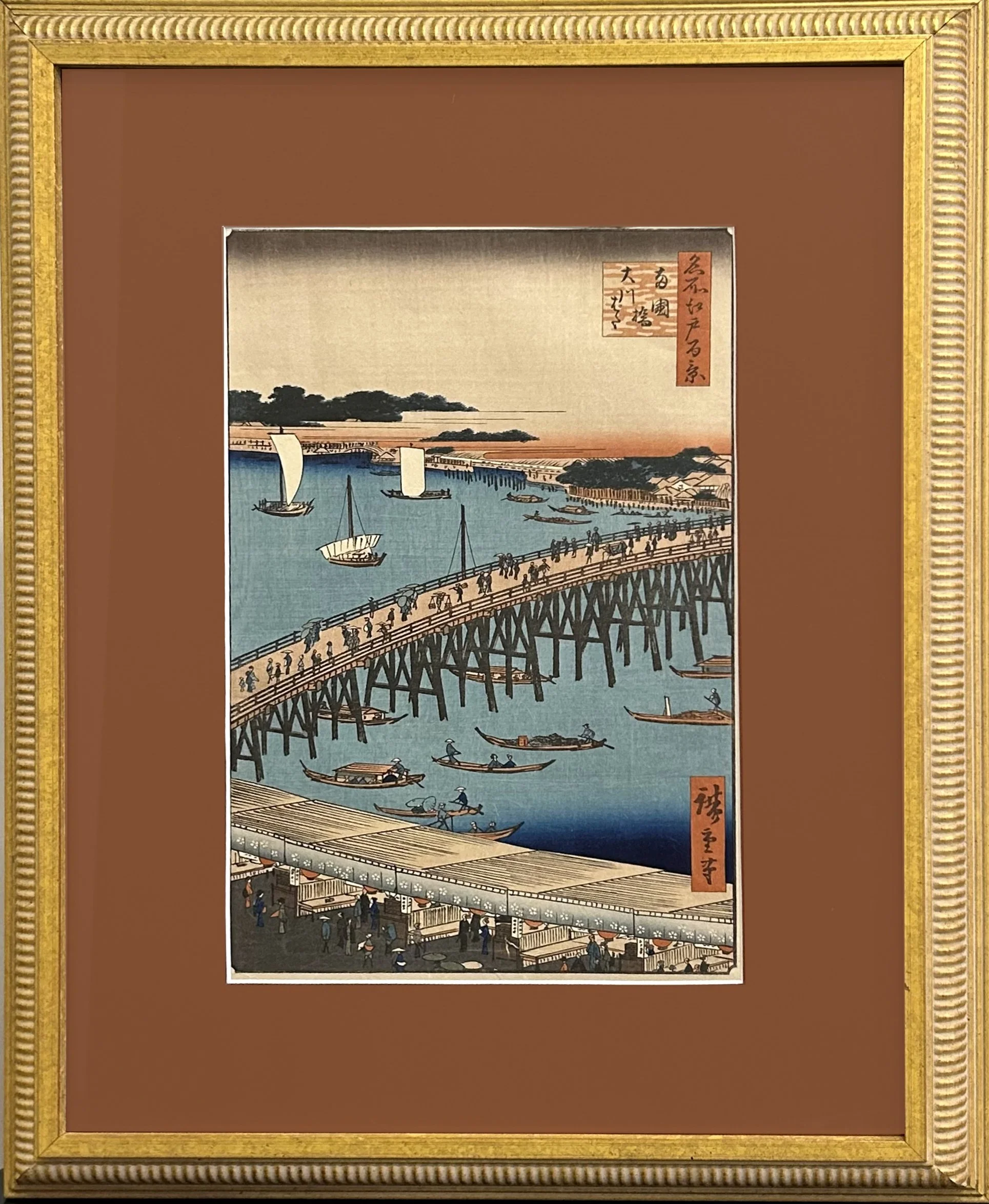
“Sailboats & Bridge”
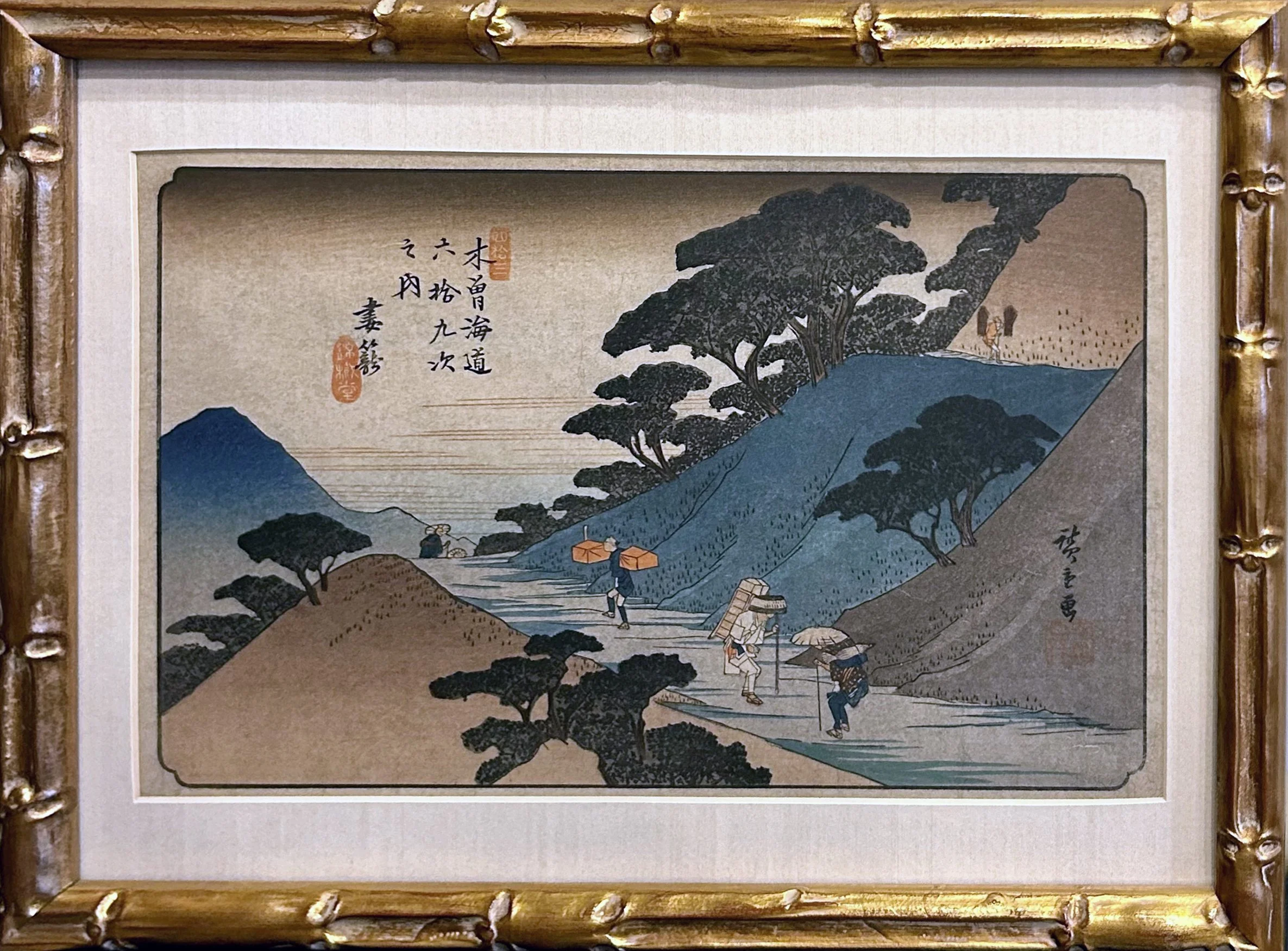
“Japanese Landscape”